
Sustainable housing in an urban environment
The issue of housing shortages has been an integral part of the German media for years. Cities and municipalities are struggling to find affordable housing and are calling on politicians to take action. This trend is intensified by the constant influx into urban areas.
What can be done? A quick solution for more living space is urban densification.
Vacant areas within an existing development are (re)utilised as living space. There are many forms of redensification, which can take the form of adding storeys, extensions, closing the edges of blocks of flats, densification within blocks or the general conversion of industrial and office space.
Urban redensification should always keep a close eye on the microclimate within a residential neighbourhood.
Wind axes, water areas and, above all, parks and green strips play a decisive role here.
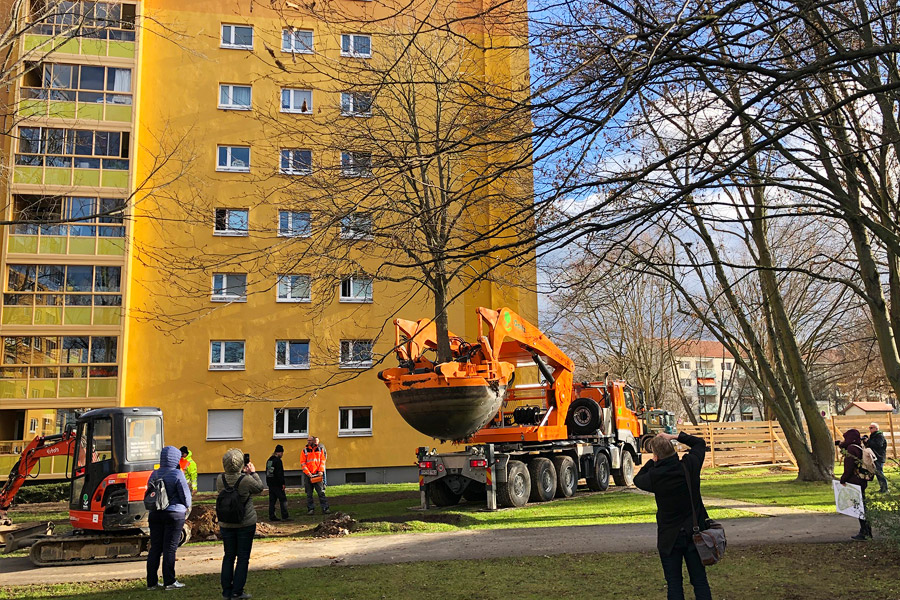
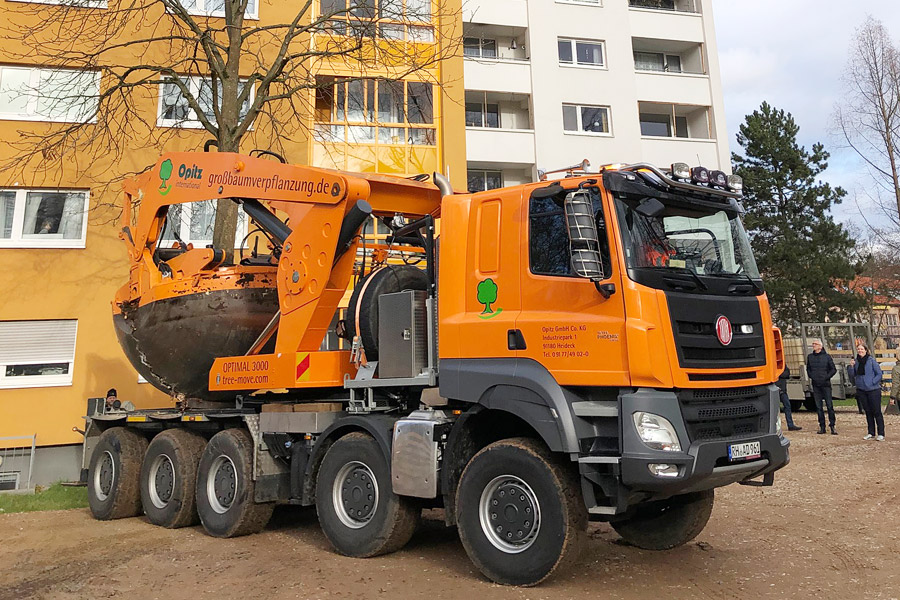

Large trees make a difference
If, for example, green spaces and trees are reduced in the course of redensification of a neighbourhood, the positive effects on the well-being of residents are also reduced. Especially in the summer months, green spaces and trees make an important contribution to equalising the temperature within built-up areas. Planting large trees can reduce the perceived temperature by a good 20˚ C on hot days. Without shade, the perceived temperature at 30˚ C is a good 45˚ C.
In an area planted with large trees, this perceived temperature is reduced to a pleasant 25˚ C. We help you to make urban redensification climate-friendly. Our focus here is on three relevant factors: green space provision, green space design and the degree of sealing of the areas concerned.
With opitz tree-move, you too can turn your neighbourhood into a green oasis.